Nursing Home Integration
Dialysis Care Coordinated Across Nursing & Rehab Settings
Continuity of Care • Coordination • Compassion
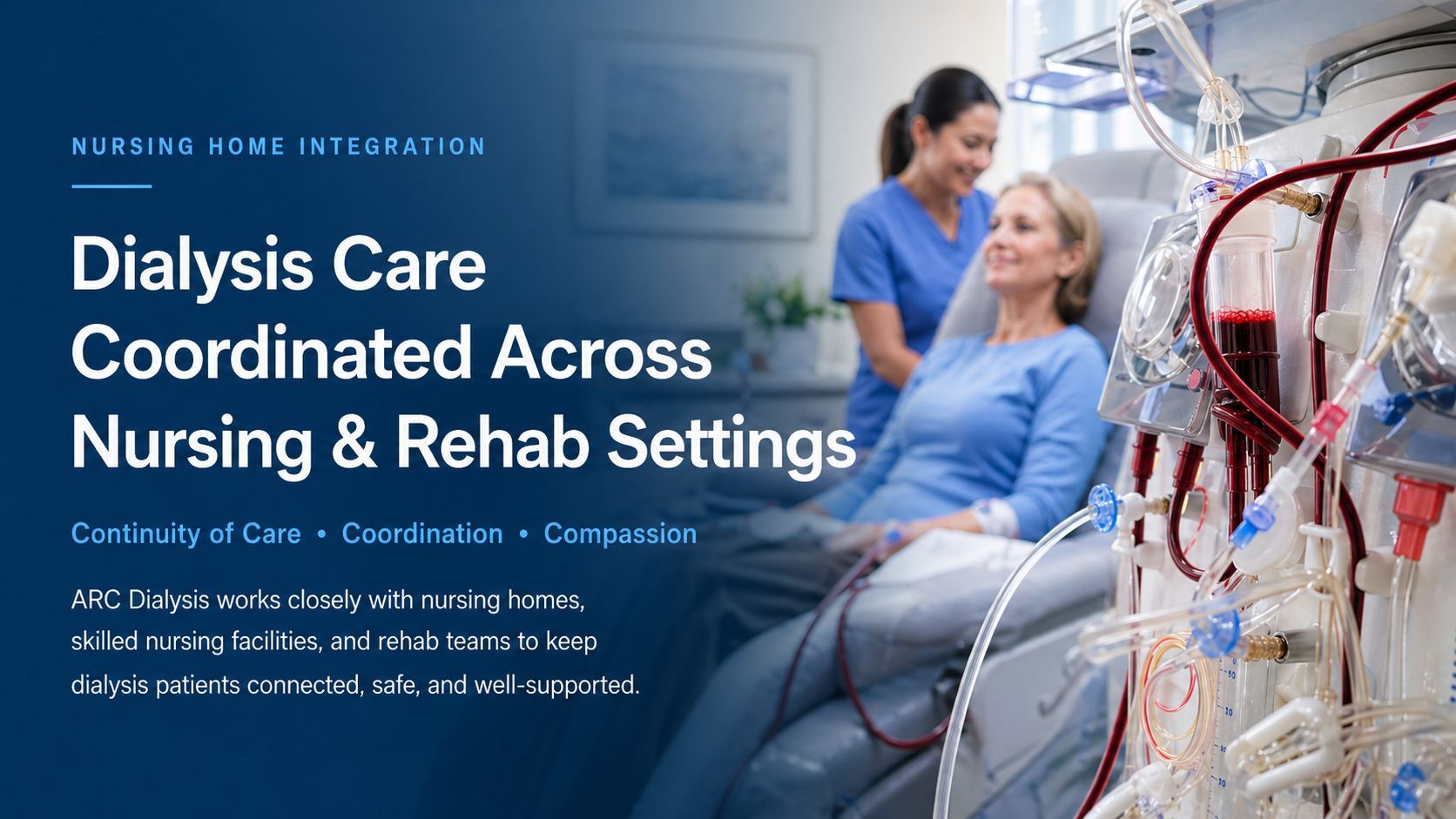
ARC Dialysis works closely with nursing homes, skilled nursing facilities, and rehab teams to keep dialysis patients connected, safe, and well-supported.
What Is Nursing Home Integration?
Many patients who require dialysis are also dealing with other complex health conditions that make independent living difficult. When these patients enter a skilled nursing facility (SNF) or short-term rehabilitation program, their dialysis needs don't pause — and neither does ARC.
ARC Dialysis helps ensure patients are transported to and from dialysis, that their care records are shared appropriately, and that their dialysis schedule fits within the facility's care plan.
Facility Types ARC Works With
- Skilled Nursing Facilities (SNFs)
- Short-Term Rehabilitation Centers
- Long-Term Care Facilities
- Assisted Living Facilities with Complex Patients
- Hospital Step-Down Units
How Care Coordination Works
Communication with Facility Teams
ARC coordinates directly with nursing home staff, physicians, and care managers to align dialysis schedules, medication reconciliation, and patient monitoring.
Shared Care Records
Treatment records, lab results, and care notes are shared between ARC and facility care teams to ensure everyone has the information they need.
Transportation Support
For patients who need transportation to and from dialysis, ARC helps connect families and facilities with appropriate transport resources.
Continuity of Care
One of the greatest risks for dialysis patients in transition is missed treatments. Even a single missed session can result in fluid buildup, dangerous electrolyte levels, and hospital readmission. ARC Dialysis prioritizes continuity by maintaining clear communication with receiving facilities before, during, and after a patient's stay.
When a patient is discharged from a SNF back to home or another care setting, ARC works to ensure the next steps in dialysis care are already in place.
Continuity Priorities
- No missed dialysis sessions during transitions
- Pre-discharge planning with facility staff
- Medication reconciliation across settings
- Family communication at every step
- Follow-up scheduling before discharge

Support for Patients and Families
Families are often overwhelmed when a loved one moves into a SNF while also requiring dialysis. ARC's team takes time to explain the care plan, answer questions, and help families understand what to expect. We believe families are part of the care team, and we work to keep them informed and included throughout the process.
We understand that navigating a new care environment while managing a serious medical condition is challenging. Our goal is to reduce confusion, build trust, and make sure no family feels like they are facing this alone.
How ARC Supports Families
- Clear explanations of the dialysis schedule and what it means for daily facility life
- Regular communication between ARC staff and family contacts
- Guidance on what questions to ask the facility's care team
- Help navigating transitions back to home dialysis or outpatient care when appropriate
Working With Facility Teams
ARC Dialysis values its relationships with skilled nursing and rehabilitation facilities. We understand that facility staff carry heavy responsibilities, and we work to make the dialysis coordination piece as smooth as possible for everyone involved.
Scheduling Flexibility
ARC works to accommodate facility care routines when scheduling dialysis transport and session times.
Clear Documentation
ARC provides clear treatment records and notes that integrate into facility care planning workflows.
Responsive Communication
Facility coordinators and social workers have a direct line to ARC's care coordination team.
Discharge & Transition Planning
When a patient is preparing to leave a facility, ARC begins coordinating next steps immediately. This includes confirming the outpatient dialysis schedule, arranging transportation if needed, communicating with the patient's nephrologist, and ensuring the patient and caregiver understand what to do on day one back home.
Transitions are one of the most vulnerable moments in a dialysis patient's care journey, and ARC approaches them with urgency and care.

Need Help Coordinating Dialysis Care for a Nursing Home Patient?
Our care coordination team is experienced in working with facilities, families, and physicians. Contact ARC Dialysis today to discuss how we can support your patient or loved one.
Dialysis Care Across Care Settings
Skilled Nursing Facilities
ARC coordinates with SNF staff to maintain dialysis schedules, share care records, and support patients during their stay.
Short-Term Rehab
For patients recovering from surgery or illness while on dialysis, ARC ensures treatment continues without interruption during the rehab period.
Transition to Home
When patients are ready to return home, ARC helps plan the transition back to outpatient or home-based dialysis care.
Find a Location Near You
The Kidney Institute of Bonita Springs
26381 S. Tamiami Trail #122Bonita Springs, FL 34134
(239) 388-7770
Questions to Ask When a Loved One Enters a Nursing Home
Preparation and communication are the best tools for ensuring your loved one's dialysis care continues safely.
For Families
- Will dialysis appointments continue on the same schedule?
- Who at the facility will communicate with the ARC care team?
- How will we be notified of any changes to the treatment plan?
- What transportation is available for dialysis trips?
For Facility Staff
- Contact ARC Dialysis to establish a care coordination relationship
- Share the patient's current medication list and care notes
- Include dialysis appointments in the patient's daily schedule
- Keep ARC's contact information accessible to your care team
"Dialysis doesn't pause because a patient moves into a facility. Our job is to make sure the care travels with them — and that the people around them know exactly what to expect."— ARC Dialysis Care Coordination Team