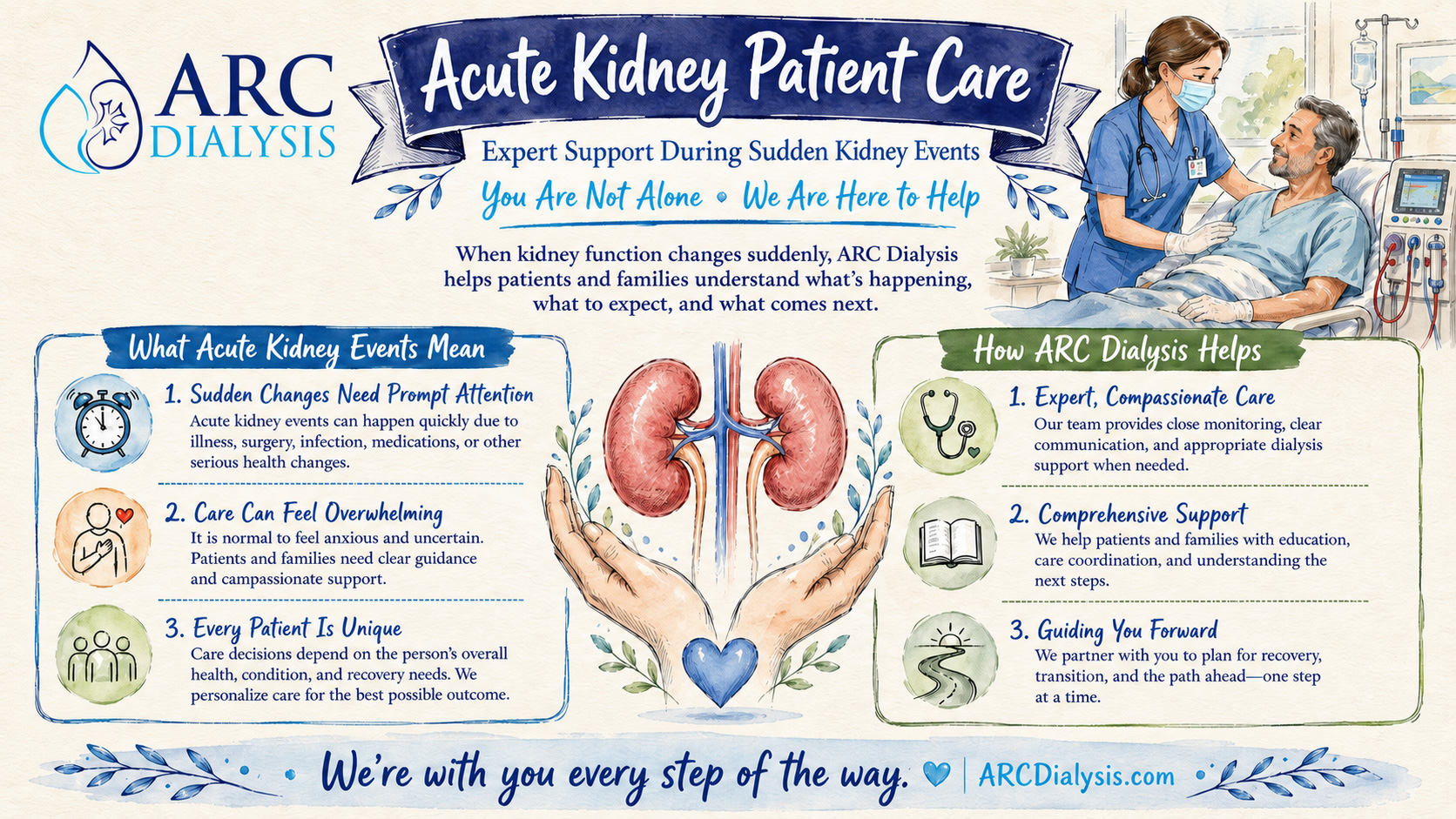
Acute Kidney Patient Care
Expert Support During Sudden Kidney Events
You Are Not Alone • We Are Here to Help
When kidney function changes suddenly, ARC Dialysis helps patients and families understand what's happening, what to expect, and what comes next.
What Is Acute Care
Understand it →Hospital Dialysis
How it works →Common Questions
Get answers →Find a Location
Near you →
Facing an Acute Kidney Event
If you or someone you love has recently been told that their kidneys are failing, or that dialysis may be needed urgently, it can feel overwhelming and frightening. Acute kidney events can happen suddenly and may require immediate medical attention, urgent dialysis support, or inpatient kidney care. With the right care team in place, these moments can be managed with clarity, compassion, and steady guidance. ARC Dialysis helps patients and families understand what acute kidney care means in plain, honest language.
At ARC Dialysis, acute kidney care is never treated like a routine appointment. It is a serious moment when patients, caregivers, physicians, and hospital teams need clear communication and fast coordination. Our patient-first focus means helping people understand what is happening, what dialysis may involve, and what the next step of care may look like. Whether dialysis is temporary during recovery or becomes an ongoing need, ARC keeps dignity, communication, and compassion at the center of every decision.
ARC Dialysis brings experience in acute dialysis services, kidney failure care, hospital dialysis coordination, and patient-centered dialysis support across Florida. Our team works closely with nephrologists, care teams, and families to help each patient move from crisis to stabilization with as much comfort and understanding as possible. For patients and caregivers searching for help with sudden kidney failure, acute kidney injury, or urgent dialysis care, ARC provides trusted support when answers matter most.
What Is Acute Kidney Care?
AKI means the kidneys have suddenly stopped working as well as they should. Unlike chronic kidney disease, which develops over years, acute kidney injury can happen in hours or days. Common causes include severe infections, dehydration, surgery complications, certain medications, and reduced blood flow to the kidneys.
In serious cases, the kidneys may temporarily stop filtering waste from the blood entirely. This is a medical emergency requiring prompt evaluation and, in many cases, dialysis to prevent dangerous complications.
Common Signs of Acute Kidney Concern
- Sudden decrease in urine output
- Swelling in legs, ankles, or feet
- Unusual fatigue or confusion
- Nausea, vomiting, or loss of appetite
- Shortness of breath or chest pain
When Dialysis May Be Needed Urgently
Fluid Overload
When kidneys cannot remove excess fluid, dangerous fluid buildup in the lungs and body may require immediate dialysis to restore balance.
Toxin Buildup
Waste products like creatinine and urea build up rapidly when kidneys fail, potentially causing confusion, seizures, or other serious complications that dialysis can address.
Electrolyte Imbalance
Dangerous potassium and acid-base imbalances caused by kidney failure can affect the heart and other organs — dialysis can quickly correct these levels.
What to Expect
The patient will likely be in a hospital setting where a nephrologist (kidney specialist) and care team monitor kidney function closely. Dialysis may begin in the ICU or a specialized unit, and sessions may happen more frequently than a standard outpatient schedule. The care team will closely track labs, fluid balance, and kidney function to guide decisions about how long dialysis is needed and what type is best.
For families, this time can feel chaotic. It's normal to feel uncertain about the outcome, the process, and what happens next. The best thing families can do is stay in close communication with the medical team, ask questions, and lean on support resources.
During the Hospital Stay
- Ask the nephrologist to explain the current kidney function and the treatment plan
- Request written information about dialysis procedures
- Designate one family spokesperson to communicate with the care team
Preparing for Next Steps
- Ask whether kidney function is expected to recover or whether ongoing dialysis will be needed
- Begin discussing outpatient dialysis options with the care team
- Contact ARC Dialysis to learn about transitioning to outpatient care
How ARC Dialysis Helps
Care Navigation
ARC's team can help patients and families understand the dialysis process, answer questions, and connect with the right resources at the right time.
Transition Planning
When a patient is ready to leave the hospital, ARC helps coordinate the transition to outpatient dialysis — ensuring no gap in care occurs during discharge.
Nearby Dialysis Centers
ARC Dialysis operates multiple centers across Florida, making it easier to find a convenient outpatient location close to home.
What Comes After Acute Care
In some cases, kidneys partially or fully recover after an acute event. In other cases, especially when there is underlying chronic kidney disease, the patient may need to begin ongoing dialysis. In either scenario, ARC Dialysis is available to help.
For patients transitioning to ongoing outpatient dialysis, ARC's team provides a full orientation — including treatment planning, dietary guidance, lab monitoring, and care team introductions. The goal is to help patients feel as comfortable and informed as possible entering this new phase.

Common Questions
Will my kidneys recover after an acute kidney injury?
It depends on the cause and severity. Some patients experience full recovery; others may have lasting kidney damage that leads to chronic kidney disease or the need for ongoing dialysis. Your nephrologist is the best source of information about your specific prognosis.
How long will dialysis be needed after an acute kidney event?
This varies widely. Some patients need temporary dialysis while their kidneys recover. Others may need dialysis indefinitely. Your care team will monitor kidney function closely and guide the decision-making process.
Can I choose where I receive outpatient dialysis?
Yes. After stabilization, you work with your nephrologist and care team to select an outpatient dialysis center that fits your location, schedule, and care needs. ARC Dialysis offers multiple convenient locations across Florida.
How do I connect with ARC Dialysis for outpatient care?
Contact ARC Dialysis directly to speak with our care coordination team. We will help you understand your options, review your care needs, and find the right ARC location for you.
Ready to Talk to the ARC Dialysis Team?
Whether you are currently in the hospital, recently discharged, or planning for next steps, our care team is here to listen and help. Call us or request information today.
How ARC Supports Your Care Journey
Inpatient Dialysis Support
ARC Dialysis is experienced in supporting patients who are transitioning from hospital-based dialysis to outpatient care after an acute kidney event.
Discharge Coordination
Our care coordinators work directly with hospital teams to ensure patients have a dialysis appointment scheduled before they leave the hospital.
Home Dialysis Options
For appropriate patients, home hemodialysis or peritoneal dialysis may be an option after acute care. ARC's team can explain whether home dialysis is available and right for you.
Find a Location Near You
The Kidney Institute of Bonita Springs
26381 S. Tamiami Trail #122Bonita Springs, FL 34134
(239) 388-7770
For Patients and Families During an Acute Kidney Event
Knowledge and communication are powerful tools during a medical crisis. You have every right to ask questions and understand what is happening.
What to Do Now
- Stay in close communication with the hospital nephrology team
- Ask for explanations of every procedure and lab result in plain language
- Designate a family contact who can speak with the care team regularly
- Begin asking about next-step dialysis options early — don't wait until discharge
How ARC Can Help
- Call ARC Dialysis to speak with a care coordinator
- Ask about outpatient dialysis availability near your home
- Request information on the transition process from hospital to ARC care
"An acute kidney event is frightening. But the right information and the right care team can make all the difference. We are here to help patients and families through every step of the process."— ARC Dialysis Care Team, South Florida